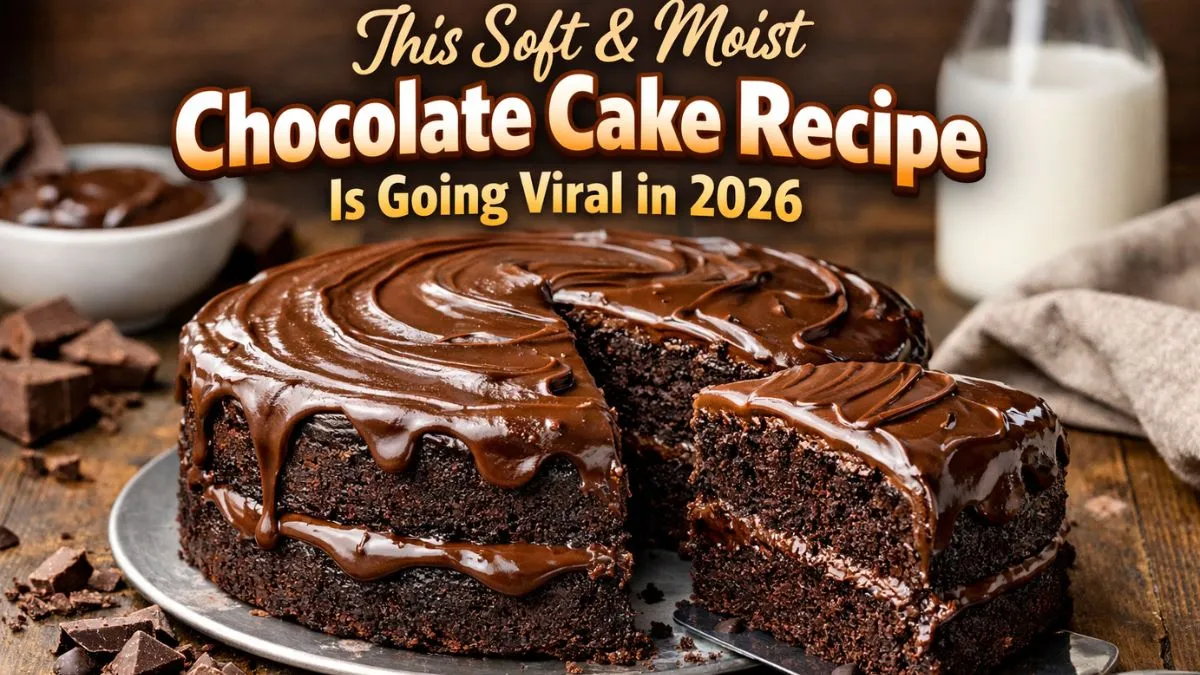
Chocolate cake sounds simple. Yet many home bakers across the United States still struggle with the same problem: dry texture, dense crumbs, or a cake that looks good on the outside but tastes disappointing inside.
You follow the recipe carefully. You measure the ingredients. You preheat the oven. But the result doesn’t feel bakery-quality.
So what’s going wrong?
In this guide, I’ll walk you through why chocolate cakes often turn out dry or flat—and how to fix it. This is a soft, moist chocolate cake recipe that works for beginners, busy parents, college students, and even first-time bakers. It uses easy-to-find ingredients from any American grocery store and simple techniques that make a real difference.
Let’s break it down step by step.
Why Chocolate Cake Often Turns Out Dry or Dense
Before we jump into the recipe, it helps to understand the problem.
Overmixing the Batter
One of the biggest mistakes people make is mixing too much. When you stir flour too long, you develop gluten. Gluten is helpful for bread, but not for cake. Too much gluten makes the cake chewy instead of soft.
Incorrect Measuring
Scooping flour directly with a measuring cup can pack it down. That means you’re adding more flour than the recipe needs. Extra flour equals dryness.
In the U.S., many home bakers use cup measurements. That’s fine, but the way you measure matters.
Oven Temperature Issues
Home ovens across America often run hotter or cooler than the dial shows. Even a 15-degree difference can affect texture.



If the cake bakes too long, moisture escapes. The result is crumbly instead of tender.
Not Enough Moisture Ingredients
Chocolate cakes need balance. Cocoa powder absorbs moisture. If the recipe doesn’t include enough liquid or fat, the cake will taste dry—even if it looks perfect.
Now that we understand the common causes, let’s move to the solution.
The Soft & Moist Chocolate Cake Recipe That Actually Works
This recipe has been tested in standard U.S. home kitchens using regular 8-inch round cake pans. It’s simple, reliable, and forgiving.


Ingredients
You likely already have most of these at home:
2 cups all-purpose flour
1 ¾ cups granulated sugar
¾ cup unsweetened cocoa powder
2 teaspoons baking soda
1 teaspoon baking powder
1 teaspoon salt
2 large eggs (room temperature)
1 cup whole milk (room temperature)
½ cup vegetable oil
2 teaspoons pure vanilla extract
1 cup hot coffee or hot water
Coffee enhances chocolate flavor but does not make the cake taste like coffee. If you prefer, use hot water instead.
Step-by-Step Instructions for a Perfect Texture
Step 1: Prepare Your Pans and Oven
Preheat your oven to 350°F.
Grease two 8-inch round cake pans and line the bottoms with parchment paper. This prevents sticking and helps the cake release cleanly.
If you only have one pan, you can bake in batches.
Step 2: Mix the Dry Ingredients
In a large bowl, whisk together flour, sugar, cocoa powder, baking soda, baking powder, and salt.
Whisking removes lumps and evenly distributes the leavening agents. This step helps the cake rise properly.
Step 3: Add Wet Ingredients
Add eggs, milk, vegetable oil, and vanilla extract to the dry mixture.
Using a hand mixer on low speed, mix just until combined. You can also mix by hand with a whisk.
The batter will look thick at this stage.
Step 4: Add the Hot Liquid
Slowly pour in the hot coffee or hot water while mixing on low speed.
The batter will become thin. That’s normal. A thinner batter helps create a moist crumb.
Do not overmix. Stop as soon as everything looks blended.
Step 5: Bake
Divide the batter evenly between the prepared pans.
Bake for 30 to 35 minutes.
To test doneness, insert a toothpick into the center. If it comes out with a few moist crumbs (not wet batter), it’s ready.
Avoid baking until the toothpick is completely dry. That usually means the cake is overbaked.
Step 6: Cool Properly
Let the cakes cool in the pans for 10 minutes.
Then transfer them to a wire rack to cool completely before frosting.
Cooling is important. Frosting a warm cake can cause melting and sliding.
Why This Recipe Stays So Moist
There are three key reasons this cake stays soft.
First, vegetable oil instead of butter. Oil remains liquid at room temperature, keeping the cake tender even the next day.
Second, hot liquid added at the end. This “blooms” the cocoa powder, deepening flavor and improving texture.
Third, proper balance of leavening agents. Baking soda and baking powder work together to create a light crumb.
These small adjustments make a noticeable difference.
Simple Chocolate Frosting That Pairs Perfectly
A soft cake deserves a smooth frosting.
Here’s an easy American-style chocolate buttercream:
1 cup unsalted butter, softened
3 ½ cups powdered sugar
½ cup cocoa powder
½ teaspoon salt
2 teaspoons vanilla extract
4 to 6 tablespoons heavy cream or milk
Beat butter until creamy. Add powdered sugar and cocoa gradually. Mix in vanilla and cream until smooth and spreadable.
If frosting feels too thick, add a little more cream. If too thin, add powdered sugar.
Let the cake layers cool fully before spreading.
Common Mistakes to Avoid
Even a good recipe can fail if small details are overlooked.
Using cold ingredients can cause uneven mixing. Let eggs and milk sit out for about 30 minutes before baking.
Opening the oven door too early can cause the cake to sink in the center. Wait at least 25 minutes before checking.
Skipping parchment paper can lead to sticking, especially in older pans.
Overbaking is the most common issue. Set a timer and check early.
These small habits help create consistent results.
Practical Baking Tips for U.S. Home Kitchens
Many American homes use standard electric ovens. If yours tends to run hot, consider purchasing an inexpensive oven thermometer. They’re available at most grocery or big-box stores.
If you live in high-altitude states like Colorado or Utah, baking may require slight adjustments. At higher elevations, cakes can rise too quickly and collapse. Reducing sugar slightly and increasing liquid can help.
If you’re baking for a birthday party, school event, or family dinner, this cake can be made one day ahead. Store tightly wrapped at room temperature.
For longer storage, refrigerate for up to four days. Bring slices to room temperature before serving for the best texture.
How to Turn This Into Cupcakes
This same batter works for cupcakes.
Line a standard 12-cup muffin tin with paper liners. Fill each about two-thirds full.
Bake at 350°F for 18 to 22 minutes.
The result is soft, moist chocolate cupcakes perfect for classroom celebrations or office gatherings.
Making It Your Own Without Complicating It
Once you master the base recipe, small additions can change the flavor without affecting texture.
You can stir in chocolate chips before baking.
Add a teaspoon of espresso powder for deeper flavor.
Replace milk with buttermilk for a slight tang.
Just avoid major ingredient swaps unless you understand how they affect structure.
Baking is chemistry. Small changes matter.