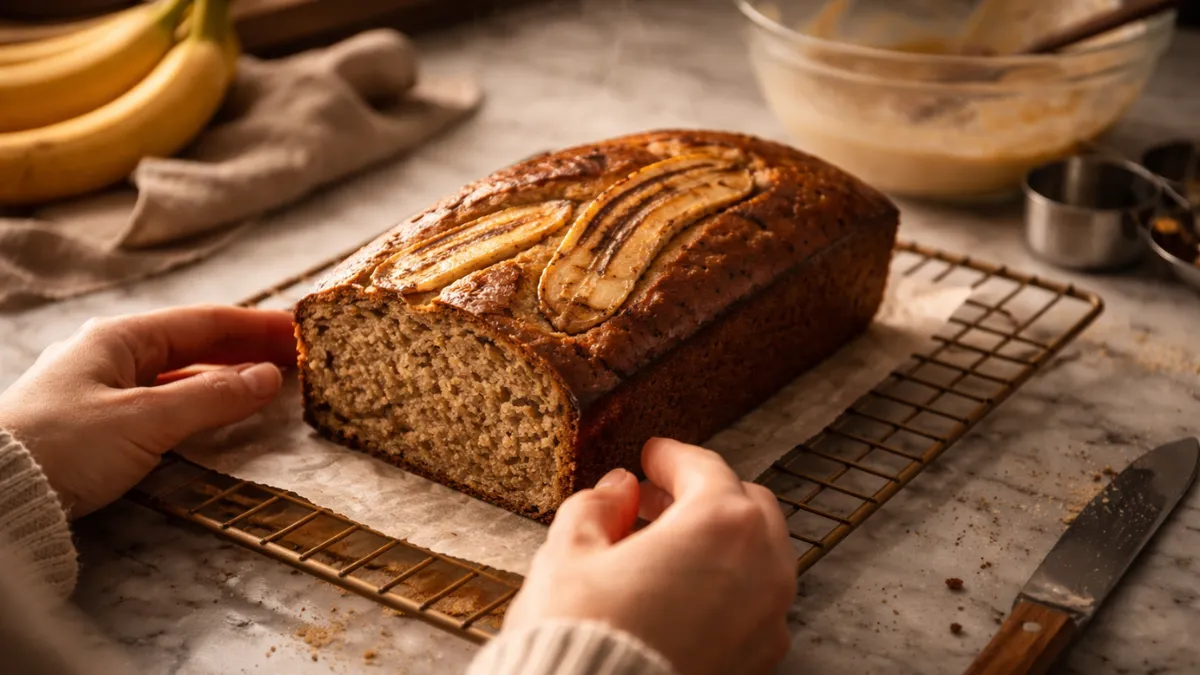
There’s something familiar and comforting about walking into a kitchen filled with the warm aroma of freshly baked banana bread cake. Many home bakers in the USA try to recreate that bakery-style softness and rich flavor, but often end up with a loaf that’s dry, dense, or lacking depth.
The good news is that making a moist, flavorful banana bread cake at home doesn’t require professional skills. It comes down to a few practical techniques that improve texture, sweetness, and overall consistency.

In this guide, you’ll learn simple, reliable methods that help your banana bread cake turn out soft, aromatic, and consistently satisfying—whether you’re baking for family, guests, or just a quiet weekend treat.
Why Banana Bread Cake Often Turns Out Dry
One of the most common frustrations is pulling a loaf out of the oven that looks perfect but feels dry when sliced. This usually happens because of small but important mistakes in preparation.
Overmixing the batter is a key reason. When flour is mixed too aggressively, it develops gluten, which leads to a tougher texture instead of a soft crumb. Another issue is using bananas that are not ripe enough. Under-ripe bananas lack natural sweetness and moisture.
In many American kitchens, people also rely heavily on measuring cups instead of weighing ingredients. Slight variations in flour quantity can quickly affect moisture balance.
A simple solution is to mix gently, use fully ripe bananas with brown spots, and level your flour correctly. These small adjustments can make a noticeable difference in how your cake turns out.
Choosing the Right Bananas for Maximum Flavor
Bananas are the heart of this recipe, yet many people underestimate their importance. Using the wrong stage of ripeness can significantly change the taste and texture.
The best bananas for banana bread cake are those that look overripe—soft, heavily speckled, and slightly fragrant. At this stage, natural sugars are fully developed, which enhances both sweetness and aroma.
For example, a home baker in California might use fresh yellow bananas and wonder why the cake tastes bland. Switching to darker, ripened bananas instantly improves the richness without adding extra sugar.

If you only have firm bananas, you can let them sit for a few days or speed up the process by placing them in a warm spot in your kitchen.
The Secret to a Soft and Moist Texture
Achieving a moist texture is often the main goal. The balance of wet and dry ingredients plays a critical role here.
Using ingredients like melted butter, oil, or yogurt helps retain moisture. Oil, in particular, keeps the cake soft even after it cools, while butter adds flavor. Many bakers in the USA prefer combining both for the best result.
Another important step is not overbaking. Even a few extra minutes in the oven can dry out the cake. Checking doneness with a toothpick—looking for a few moist crumbs rather than a completely clean stick—helps preserve softness.

Allowing the cake to cool properly before slicing also prevents moisture loss.
How Proper Mixing Improves Your Results
Mixing might seem like a simple step, but it has a major impact on the final texture. The goal is to combine ingredients without overworking the batter.
Start by mixing wet ingredients separately, then gently fold in the dry ingredients. This method reduces the risk of overmixing and keeps the crumb tender.
In a typical home kitchen in Texas, for example, someone might use a hand mixer on high speed for convenience. While this saves time, it can lead to a denser loaf. Switching to gentle folding with a spatula often produces better results.
Keeping the batter slightly lumpy is perfectly fine—it usually bakes into a softer texture.
Enhancing Flavor Without Overcomplicating the Recipe
Many people think they need complex ingredients to improve flavor, but small additions can make a big difference.
Vanilla extract adds warmth and depth, while a pinch of salt enhances sweetness. Cinnamon or nutmeg can provide subtle spice without overpowering the banana flavor.
Brown sugar is another useful ingredient because it adds both sweetness and moisture. It also creates a richer taste compared to white sugar alone.
A simple approach works best. Instead of adding too many ingredients, focus on balancing flavors so the banana remains the highlight.
Baking Temperature and Timing That Actually Work
Even with the right ingredients, incorrect baking temperature can ruin the texture. A common issue is baking at too high a temperature, which causes the outside to cook faster than the inside.
For most home ovens in the USA, baking banana bread cake at around 325–350°F provides even cooking. Lower temperatures help the cake rise gradually and maintain moisture.
Timing also matters. Instead of relying only on the clock, observe the cake. Look for a golden top, slight cracking, and a firm center.
Using an oven thermometer can help if your oven runs hotter or cooler than expected.
Simple Add-Ins That Elevate the Cake
Once you’ve mastered the basic recipe, adding a few extras can take your banana bread cake to the next level.
Chocolate chips are a popular choice in many American households, adding sweetness and texture. Chopped walnuts or pecans provide a slight crunch and balance the softness of the cake.
For a lighter variation, some bakers add blueberries or shredded coconut. These additions bring variety without making the recipe complicated.
The key is moderation. Too many add-ins can weigh down the batter and affect baking consistency.
Storage Tips to Keep It Fresh Longer
After baking, proper storage helps maintain the cake’s softness and flavor.
At room temperature, banana bread cake can stay fresh for up to two days when wrapped tightly. For longer storage, refrigeration is an option, but it may slightly firm up the texture.
Many families in the USA prefer slicing and freezing individual portions. This allows easy reheating without losing moisture.
To bring back freshness, warming a slice in the microwave for a few seconds can restore softness and enhance aroma.
Common Mistakes and How to Avoid Them
Even with a good recipe, small mistakes can affect results. Recognizing them helps improve consistency.
Using too much flour is one of the most common errors. Always measure carefully and avoid packing the flour into the cup.
Skipping the cooling step is another issue. Cutting the cake too early can make it crumbly and uneven.
Finally, ignoring ingredient temperature can impact mixing. Using room-temperature eggs and butter helps create a smoother batter and better texture.
Paying attention to these details can turn an average bake into a reliable success.
Also Read:
Easy Homemade Vanilla Cake for Beginners
5 Common Baking Mistakes and How to Fix Them
Best Kitchen Tools for Everyday Baking
Conclusion
Banana bread cake is one of those recipes that feels simple but rewards attention to detail. Small adjustments—like choosing ripe bananas, mixing gently, and baking at the right temperature—can dramatically improve your results.
Instead of relying on complicated techniques, focusing on these practical steps allows you to create a cake that’s consistently moist, flavorful, and comforting.
With a bit of practice, your kitchen can become a place where that warm, inviting aroma becomes a regular part of your routine.
FAQs
What makes banana bread cake different from regular banana bread?
Banana bread cake is usually softer and lighter in texture, often closer to a traditional cake than a dense loaf.
Can I use frozen bananas for this recipe?
Yes, thawed bananas work well and often provide even more moisture and sweetness.
How do I know when the cake is fully baked?
Insert a toothpick into the center. If it comes out with a few moist crumbs, the cake is ready.
Can I make this recipe without eggs?
Yes, substitutes like mashed bananas or yogurt can replace eggs, though texture may vary slightly.