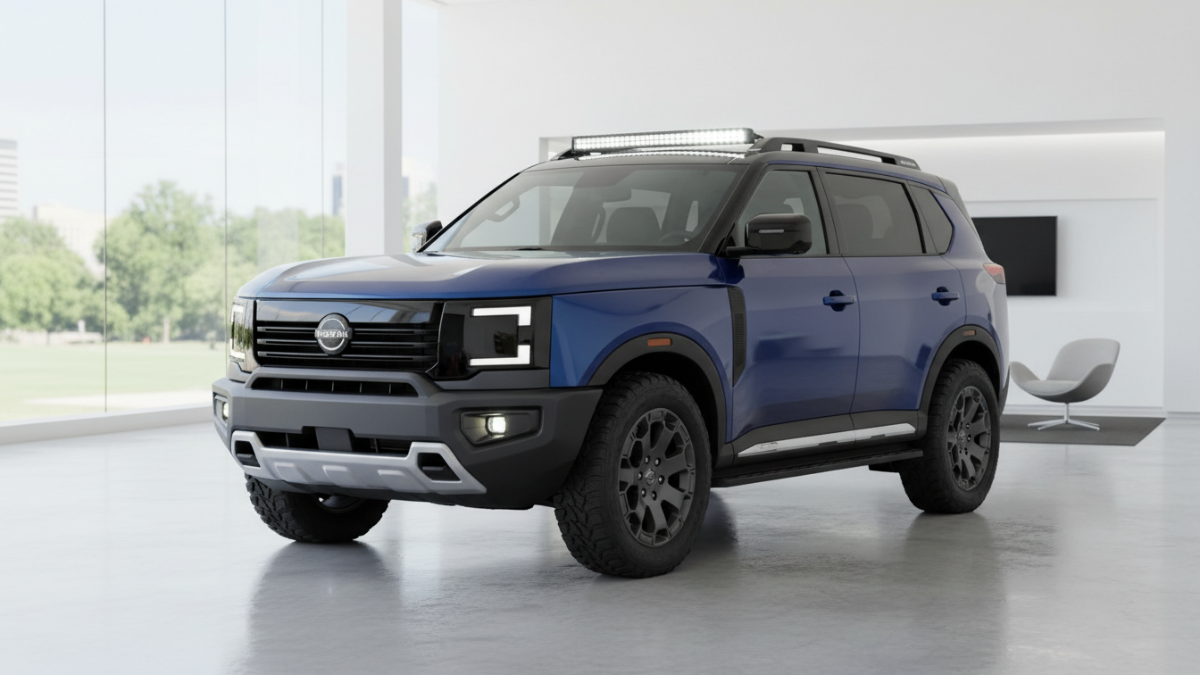
The iconic off-road SUV from Nissan is making a long-awaited comeback, and this time the next-generation Xterra is being shaped for both traditional SUV lovers and modern buyers. With a powerful V6 engine option and a new hybrid setup, the upcoming model promises improved performance, better efficiency, and enhanced everyday usability.
However, one major change has sparked debate among enthusiasts—the manual transmission is officially gone. This signals a clear shift in strategy as Nissan aligns the Xterra with current market demand and global trends.
Exterior Design: Rugged DNA Meets Modern Styling
The new Xterra is expected to retain its boxy, adventure-ready silhouette, staying true to its roots while incorporating modern design cues. Expect a bold front fascia with a large grille, sleek LED headlamps, and muscular wheel arches that emphasize its off-road capability.
Design inspiration may come from newer Nissan SUVs like the Nissan Frontier and Nissan Pathfinder, giving the Xterra a more refined yet aggressive presence. Roof rails, high ground clearance, and skid plates are likely to remain, ensuring it still appeals to outdoor enthusiasts who value durability and function.
Interior: Practical, Tech-Loaded, and Comfortable
Inside, the next-gen Xterra will likely offer a significant upgrade in cabin quality and technology. Expect a larger touchscreen infotainment system with wireless Apple CarPlay and Android Auto, a digital instrument cluster, and improved material quality throughout.
Nissan is expected to focus on practicality, with flexible seating configurations, ample cargo space, and durable interior finishes suitable for adventure use. Comfort features like dual-zone climate control, ventilated seats, and premium audio systems may also be included in higher trims, making it more competitive in the mid-size SUV segment.
Engine & Performance: V6 Power Meets Hybrid Efficiency
One of the biggest highlights is the dual powertrain strategy. The standard model is expected to feature a naturally aspirated V6 engine, likely borrowed and refined from the Nissan Frontier lineup. This engine should deliver strong torque and reliable off-road capability.
Alongside this, Nissan is preparing a hybrid variant, which will appeal to buyers seeking better fuel economy without sacrificing performance. The hybrid setup may combine a gasoline engine with an electric motor to provide smoother acceleration and reduced emissions.
Despite these advancements, the absence of a manual gearbox means the Xterra will likely come with a modern automatic transmission, possibly a 9-speed unit, optimized for both highway comfort and off-road control.
Off-Road Capability: Still Built for Adventure
The Xterra has always been known for its rugged nature, and the new version is expected to continue that legacy. Features such as:
- 4WD system with terrain modes
- Locking rear differential
- Hill descent control
- Off-road tuned suspension
will likely be standard or available depending on the variant. Nissan understands that the Xterra name carries strong off-road credibility, and it cannot afford to dilute that reputation.
Safety & Technology: Smarter Than Ever
Modern SUVs demand advanced safety, and Nissan will likely equip the Xterra with its latest driver-assistance suite. This may include:
- Adaptive cruise control
- Lane-keeping assist
- Blind-spot monitoring
- Automatic emergency braking
Expect integration of Nissan’s ProPILOT Assist system, enhancing both highway driving and daily commuting convenience.
Why No Manual Transmission?
The removal of the manual gearbox reflects broader industry trends. Demand for manual vehicles has significantly declined, especially in SUVs. Automakers like Toyota and Ford have also reduced manual offerings in many models.
By focusing on automatic and hybrid technologies, Nissan aims to:
- Improve fuel efficiency
- Meet stricter emission norms
- Appeal to a wider global audience
While purists may be disappointed, the move is a strategic one aimed at future-proofing the Xterra.
Expected Launch and Market Position
Although official confirmation is still awaited, the new Xterra is expected to launch around 2026, targeting markets like North America and potentially expanding to other regions. It will compete with popular SUVs such as the Toyota 4Runner and Ford Bronco.
Pricing is expected to be competitive, positioning the Xterra as a value-packed, adventure-ready SUV with both traditional and modern appeal.
Final Verdict
The return of the Nissan Xterra marks an exciting chapter for SUV enthusiasts. By combining a powerful V6 engine with a hybrid option, Nissan is clearly aiming to balance performance and efficiency. While the removal of the manual transmission may disappoint some hardcore fans, the overall package looks promising.
For buyers seeking a rugged SUV with modern features and versatile powertrains, the next Xterra could be one of the most compelling options in its segment.